129 Hz Frequency: Meaning, Benefits & Science (Full Guide)
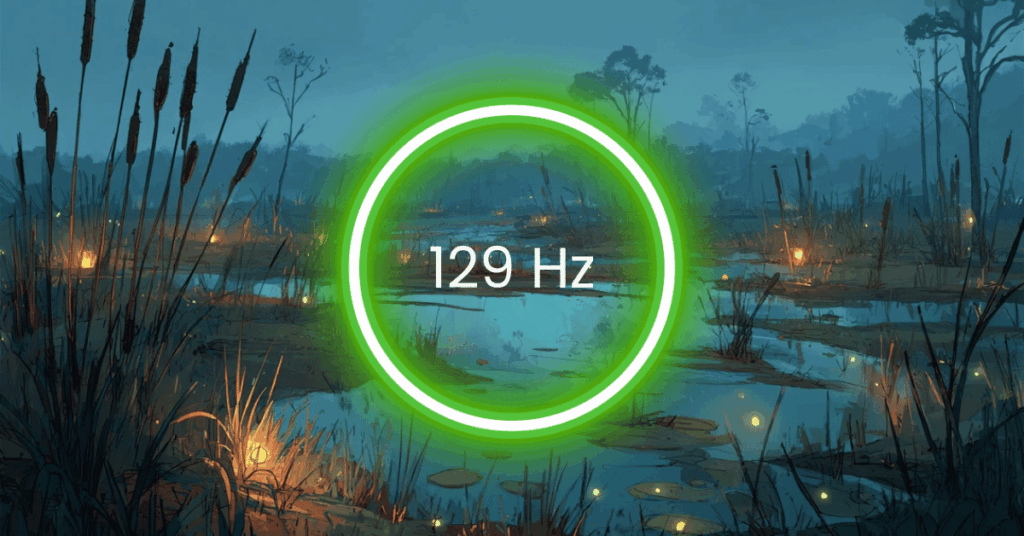
Have you ever wanted a sound that could help you achieve perfect adaptability and flexible resilience? The 129 Hz frequency sits in a dynamically adaptive part of the sound spectrum. It pulses 129 times per second, creating a rhythm that supports flexible adaptation, resilient adjustment, and the ability to flow with change.
This adaptability frequency holds special meaning in sound healing and resilience work. While it’s a clear bass tone that creates flexible strength, its effects on developing adaptive capacity are remarkable. Let’s explore everything you need to know about this fascinating frequency.
129 Hz Overview & Key Points
| Property | Details |
|---|---|
| Frequency Range | 129 cycles per second (129 Hz) |
| Wavelength | Approximately 2.7 meters |
| Brain State | Flexible resilience (adaptive strength) |
| Primary Benefits | Adaptability, flexible resilience, adjustment capacity, flowing strength |
| Audibility | Clear bass tone, flexible vibration |
| Best Used For | Building resilience, adaptability training, flexible strength, adjustment |
| Safety | Generally safe and promotes healthy flexibility |
129 Hz Frequency Meaning & Significance
The 129 Hz frequency represents perfect adaptability and flexible resilience. When we talk about 129 Hz, we mean 129 complete waves moving up and down every single second.
This frequency matters because it embodies the principle of adaptive strength. The number 129 equals 3 times 43, combining creative expression and flexibility (3) with forward momentum and determination (43). Your brain responds to this frequency with enhanced capacity to adapt while remaining strong.
Scientists measure brain activity in frequencies, just like sound. When your brain operates at 129 Hz, you become flexibly resilient. This is when rigidity transforms into adaptive strength and brittleness becomes flowing resilience.
The significance of 129 Hz goes beyond just matching brain waves. The number 129 represents strength that bends without breaking—the bamboo principle of flexible resilience. Sound therapists use it to help people develop adaptability while maintaining core strength.
Think of 129 Hz as the flexible resilience frequency. It moves at a rate that creates adaptive strength. Many people report experiencing exceptional adaptability and flowing resilience at this rate.
129 Hz Frequency Benefits for Sleep
The 129 Hz frequency is not primarily for sleep, but it supports adaptable rest. This frequency helps you adjust sleep to changing circumstances.
Some people with varying schedules use 129 Hz to maintain resilient sleep patterns. The adaptability quality helps you sleep well regardless of conditions.
People struggling with sleep disruptions sometimes benefit from 129 Hz during the day. The resilience it creates can carry into more adaptive rest.
Use 129 Hz during waking hours to develop overall adaptability. The flexible strength it creates includes resilient sleep.
129 Hz Frequency Benefits for Meditation
Meditation becomes flexibly resilient with 129 Hz support. This frequency creates what some call adaptive meditation, where practice flows with life circumstances.
When meditating with 129 Hz, you develop the ability to meditate anywhere, anytime. Rigidity releases into flexible commitment. This feels liberating and sustainable.
Many practitioners use 129 Hz for resilience meditation. The frequency helps maintain practice through life’s changes.
The frequency creates what teachers call the bamboo mind during meditation. You bend with challenges without breaking. This approach works beautifully for sustainable long-term practice.
129 Hz Frequency Benefits for Focus
Focus becomes adaptively resilient with 129 Hz support. Rather than rigid concentration, this frequency helps you adjust attention as situations require.
Your ability to pivot and adapt while maintaining effectiveness improves when 129 Hz plays. You flow with changes without losing focus.
Students find 129 Hz helpful for adapting to different learning situations. The frequency supports maintaining performance through disruptions.
People needing resilience love 129 Hz. Those facing constant change, uncertain conditions, and unpredictable circumstances benefit greatly. Many report their most adaptive, resilient performance happens with 129 Hz.
129 Hz Frequency Spiritual and Healing Properties
The 129 Hz frequency holds powerful meaning in spiritual and energy healing practices. Here are the key spiritual and healing properties:
- Spiritual Flexibility: The 129 Hz frequency creates spiritual flexibility. You adapt to changing spiritual landscapes.
- Resilient Practice: Many healers use 129 Hz for resilient spiritual practice. You maintain commitment through life changes.
- Adaptive Growth: Working with 129 Hz creates adaptive spiritual growth. You develop according to circumstances.
- Flexible Strength: Some practitioners use 129 Hz to develop flexible spiritual strength. You bend without breaking.
- Flowing Resilience: Energy workers use 129 Hz for flowing resilience. Strength becomes fluid rather than rigid.
- Adaptable Wisdom: The vibration supports adaptable wisdom. Truth expresses differently in different contexts.
- Resilient Spirit: The frequency develops resilient spirit. Challenges strengthen rather than break you.
- Flexible Healing: Many use 129 Hz for flexible healing approaches. Treatment adapts to changing needs.
- Adaptive Energy: The energy created by 129 Hz flows adaptively. Energy adjusts to circumstances naturally.
- Bamboo Consciousness: The frequency develops bamboo consciousness. Deep roots with flexible expression.
129 Hz Frequency Scientific Evidence
Scientific research on 129 Hz specifically is extremely limited. Most neuroscience studies focus on lower frequency ranges.
Brain research on resilience and adaptability shows patterns. Studies demonstrate that flexible thinking involves specific neural plasticity.
Research on psychological resilience shows brain differences. People who adapt well to change display characteristic patterns.
Studies on cognitive flexibility show that adaptive thinking uses specific neural networks. Adaptability has measurable correlates.
However, we must be honest about the evidence. There are no peer-reviewed studies on 129 Hz sound for adaptability benefits. Understanding comes from resilience research and practitioner observations.
Using 129 Hz in Music and Sound Therapy
You can hear 129 Hz clearly as a flowing, flexible bass tone. The frequency has adaptive quality.
Sound therapists use 129 Hz for resilience building. It helps people develop flexible strength and adaptive capacity.
Some resilience coaches and adaptability facilitators offer 129 Hz sessions. These support developing flowing strength.
Change management programs sometimes incorporate 129 Hz. The frequency helps participants remain resilient through transitions.
Combining 129 Hz with Binaural Beats
Binaural beats can create 129 Hz frequency. This technique plays slightly different tones in each ear. Your brain creates the 129 Hz difference between them.
For example, you might hear 200 Hz in one ear and 329 Hz in the other. Your brain perceives a 129 Hz beat that activates adaptability and flexible resilience.
Combining 129 Hz with Solfeggio Frequencies
Solfeggio frequencies can layer with 129 Hz patterns. The combination creates both specific healing and adaptive resilience.
This pairing gives you transformation with flexible strength. Many resilience practitioners use this combination.
Combining 129 Hz with Isochronic Tones
Isochronic tones pulse on and off at specific rates. A 129 Hz isochronic tone turns on and off 129 times per second. This creates an adapting rhythm that guides brain waves.
Unlike binaural beats, isochronic tones work without headphones. The flexible pulses make them effective for resilience work at 129 Hz.
Famous Songs Tuned to 129 Hz
No mainstream songs feature 129 Hz as a base musical note. However, some resilience and adaptability music uses 129 Hz rhythmic patterns.
The concept of flexible strength that 129 represents appears metaphorically in many songs about resilience and adaptation.
What Does 129 Hz Do to the Brain?
The 129 Hz frequency influences your brain by encouraging adaptive wave patterns. When your brain synchronizes with this rhythm, flexibility naturally increases.
Your brain wave patterns shift into states supporting cognitive flexibility. This triggers neural plasticity and adaptive responses.
The combination of 3 and 43 in 129 may create special resilience-oriented resonance. Creative flexibility combines with determined momentum.
Some believe that frequencies supporting adaptability may help the brain become more resilient. Regular exposure might make flexible strength more natural.
Is 129 Hz Dangerous?
The 129 Hz frequency is very safe for most people. Adaptability and resilience promote health and wellbeing.
There are essentially no safety concerns with 129 Hz. Flexible strength is fundamentally beneficial.
People should balance flexibility with appropriate boundaries. True adaptability knows when to bend and when to stand firm.
Never use flexibility to justify compromising core values. Authentic resilience maintains integrity while adapting form.
How to Listen to 129 Hz
Start by finding quality recordings from trusted adaptability or resilience sources. Use good headphones or speakers that can produce low frequencies clearly.
Set aside time for resilience building or flexibility training. Consider areas needing adaptation. Begin with 20 to 30 minute sessions.
Keep the volume at a flowing, flexible level. You should feel the frequency creating adaptive strength. Many people listen during change periods, resilience training, or flexibility practice.
Use 129 Hz when facing change or building resilience. This frequency supports flowing with circumstances while maintaining strength.
Does 129 Hz Benefit Your Chakras?
Many energy workers believe 129 Hz frequency creates flexible resilience throughout all chakras. Each energy center adapts to circumstances while maintaining function.
The adaptability quality of 129 Hz helps chakras adjust to life changes. Energy flow remains strong through disruptions.
Some practitioners see 129 Hz as developing energetic resilience. The entire system bends without breaking.
While scientific proof for chakras is limited, many people report experiencing enhanced energetic flexibility after working with 129 Hz.
Is 129 Hz Good for Studying and Productivity?
The 129 Hz frequency is excellent for adaptive studying and resilient productivity.
Students benefit from 129 Hz when facing changing learning conditions. The frequency supports maintaining performance through disruptions.
For work requiring adaptability and resilience, 129 Hz is perfect. Pivoting strategies, adjusting to changes, and maintaining effectiveness through uncertainty all benefit.
Use 129 Hz when you need to adapt while staying effective. It helps you flow with change without losing strength. Your productivity becomes resilient and sustainable.
Related Frequencies
Here are other frequencies you might want to explore:
- 128 Hz: Harmonic alignment for perfect resonance
- 43 Hz: Beta waves for alert adaptability
- 3 Hz: Delta waves for foundational flexibility
- 258 Hz: Double of 129 Hz, higher adaptive octave
- 65 Hz: Approximately half of 129 Hz
Conclusion & Final Thoughts
The 129 Hz frequency offers a powerful tool for adaptability, flexible resilience, and flowing strength. This frequency teaches that true strength bends without breaking.
This frequency works by encouraging your brain into adaptive wave patterns. These flexible patterns support adjusting to circumstances while maintaining effectiveness.
The mathematical structure of 129 (3 × 43) gives this frequency special adaptive properties. Creative flexibility combines with forward determination.
Use 129 Hz when facing change or building resilience. Many people find it becomes their tool for maintaining strength through life’s inevitable changes.
Whether you seek greater adaptability, flexible resilience, or flowing strength, 129 Hz frequency provides support. Give it a try and discover what this flexibility frequency can develop in your adaptive capacity. Like bamboo, you can bend in the storm without breaking.